
Vermont Handworks is a collaboration between Jolynn Santiago and Eric Cannizzaro. They bring a diverse set of skills and teaching experiences to their shared vision of a hands-on education space which serves the needs of their community with a mix of project oriented classes and in-depth skill building workshops.
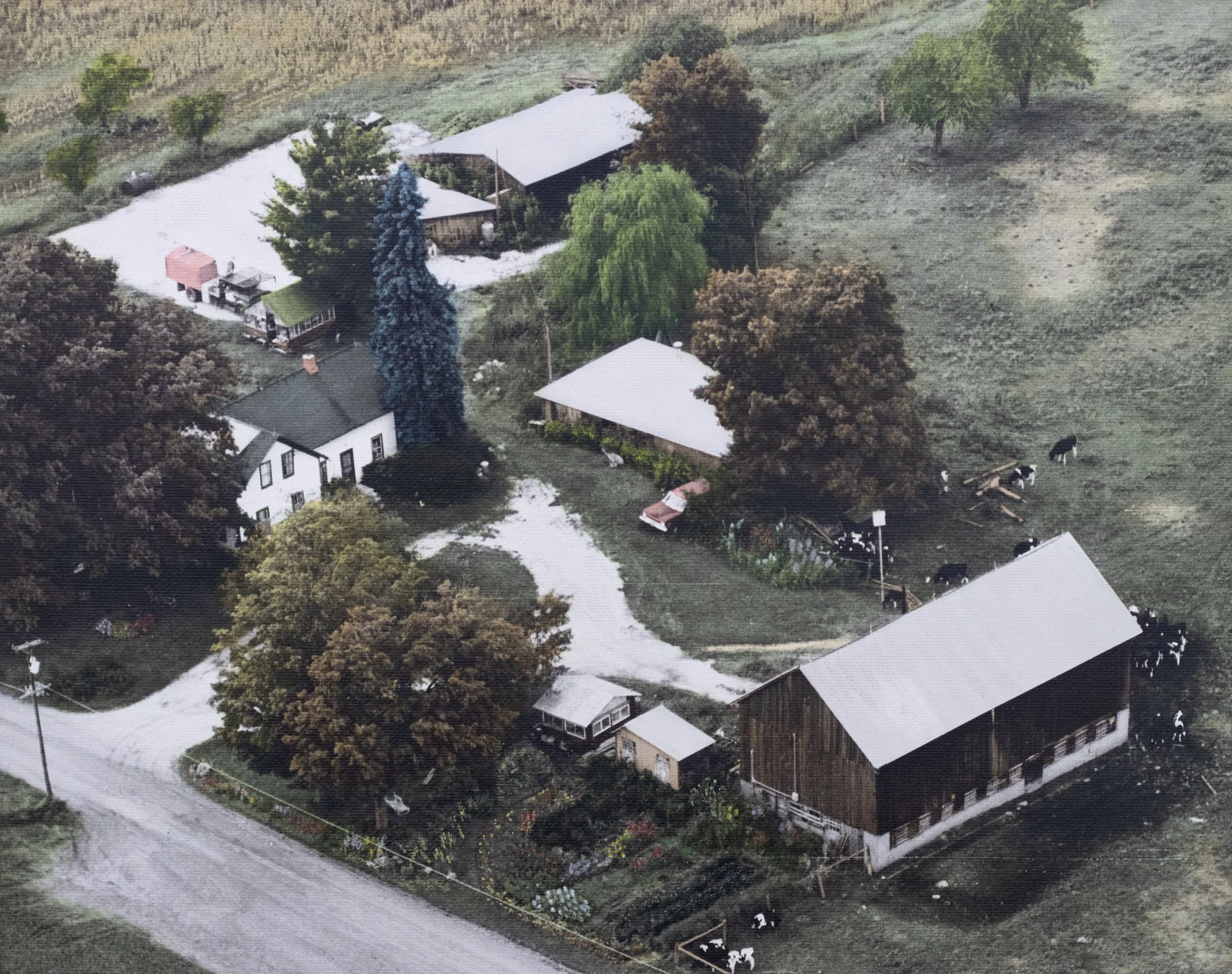
Long before it became Vermont Handworks, this was a small dairy farm—one of the countless family farms in the Champlain valley. The original barns are gone now, but their memory lingers in the trees, the flowers, and the uneven floor of the workshop. It is a place with which Eric has a deeply personal connection. Eric’s grandmother, Jeanie MacDonough (1940–2025), grew up here, left, and later returned to live the last part of her life on the same land where her earliest memories were made. Jeanie was the family’s storyteller—its informal historian—sharing tales of childhood and the long arc of life lived in one place. Her mother, Peg, a beloved teacher in the community famous for her gardens, also spent most of her life on the farm. One of her original flower beds still remains, overgrown but resilient. Many of these flowers have been carefully transplanted into new gardens surrounding the workshop.
The MacDonough/Poole Farm, 1970s
As a young girl in 4-H, Jeanie became known locally for her vegetables and pies, appearing in newspapers with her prize-winning harvests and baking. She grew up the hum of farm life, carrying with her a lifelong dedication to education, creativity, and community care. Her husband, Bruce Ladeau (1931-2011), also made a career in education, serving for many years as the principal of South Burlington High School. He was a maker at heart—carving ducks from stone and wood, and painting watercolors.
When the oldest barn on the farm burnt down in the early 1900’s, the building that would become the Vermont Handworks shop was built on the old foundation. For decades it served as the workshop of Jeanie’s grandfather Aubrey Poole, and then her uncle Archie Poole. After years of little use it came back to life in the 1990s when Jeanie and Bruce moved onto the farm and utilized the shop as they renovated the farm house. When Eric was small, the building was so full of tools, projects, and half-finished ideas he navigated it like a maze, following his grandfather’s voice through the labyrinth.
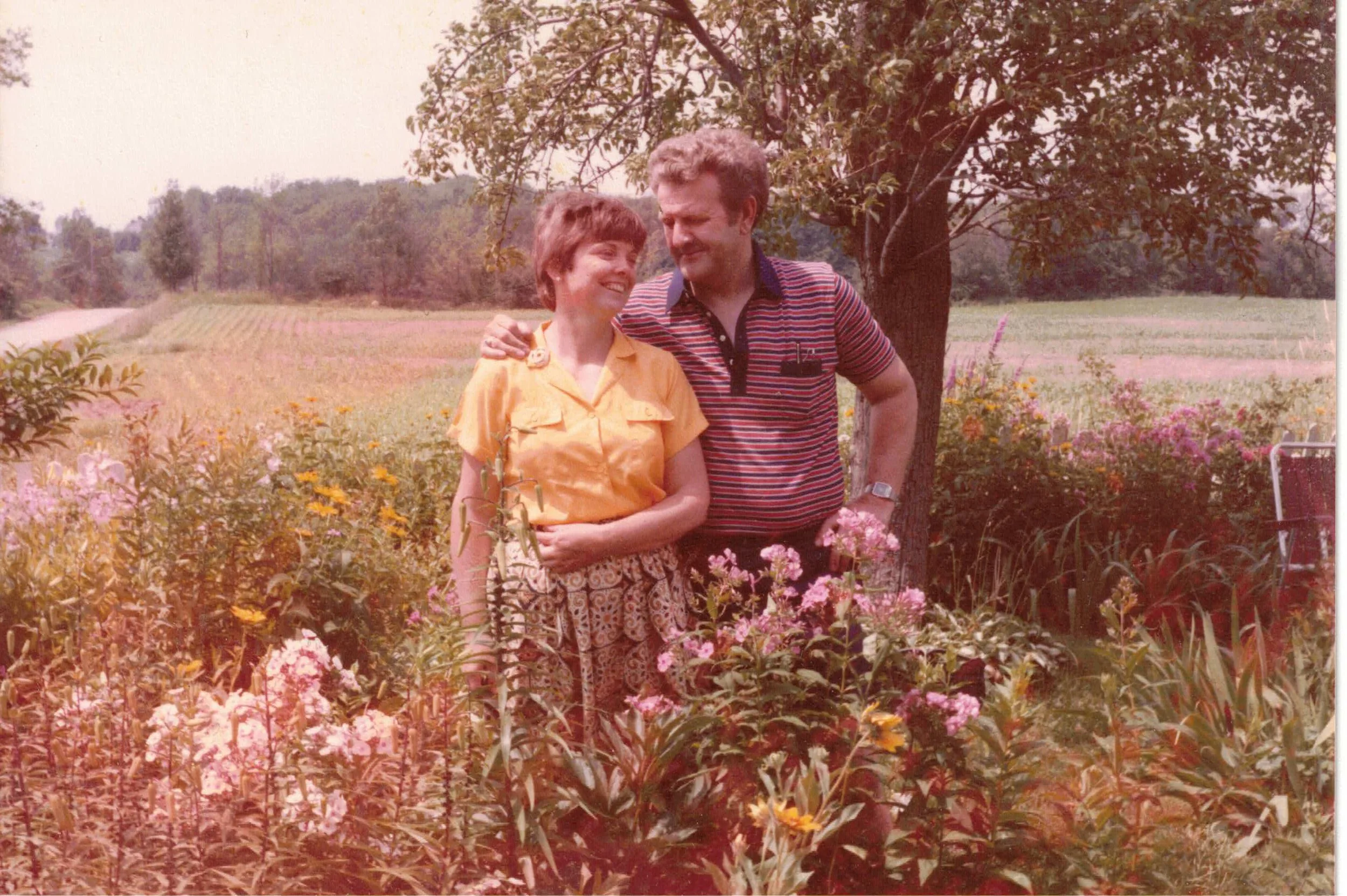
Jeanie and Bruce in Peg’s gardens, 1980s
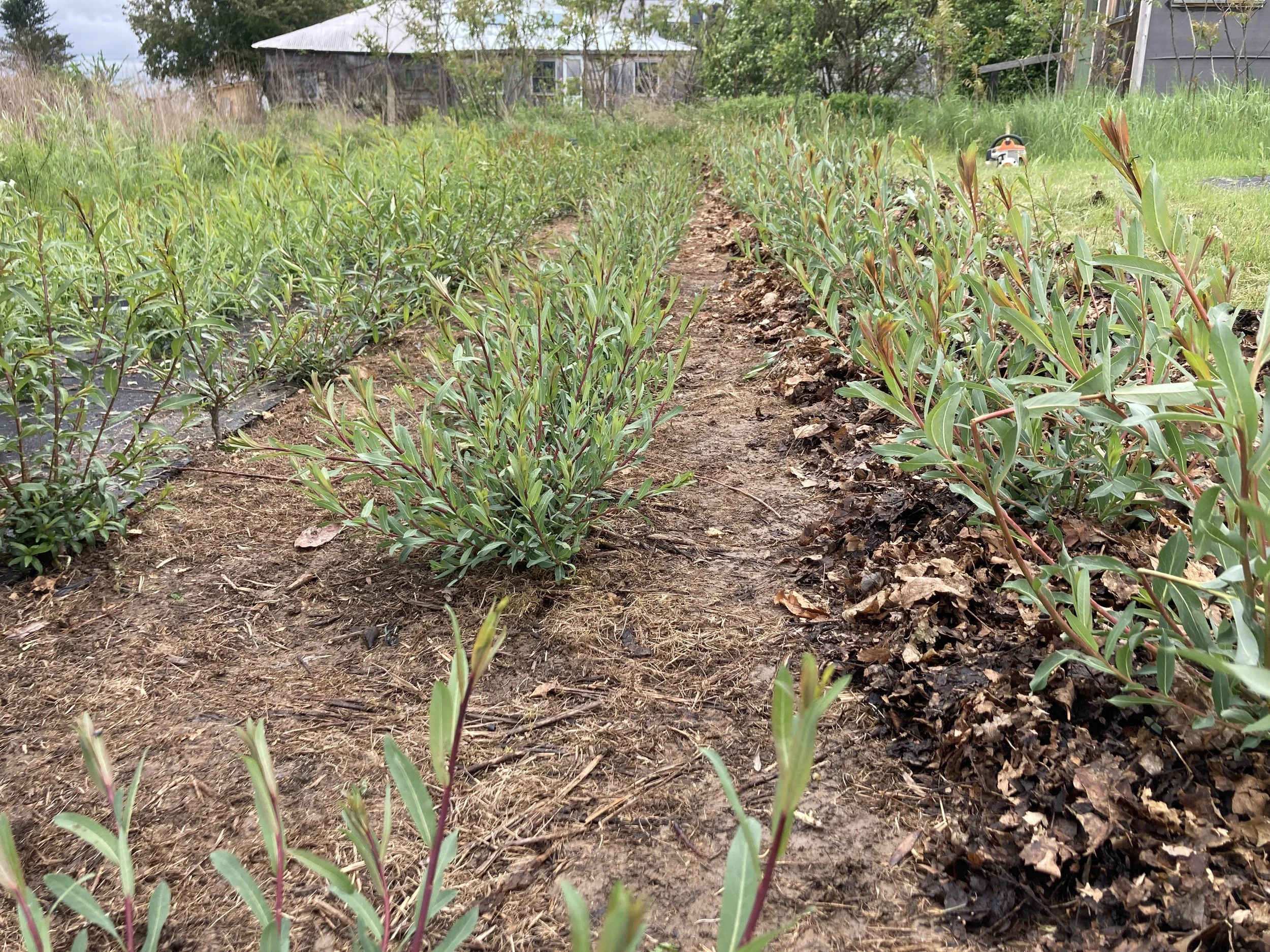
Second year basketry willows in May 2025, after their first coppice and weed barrier removal.
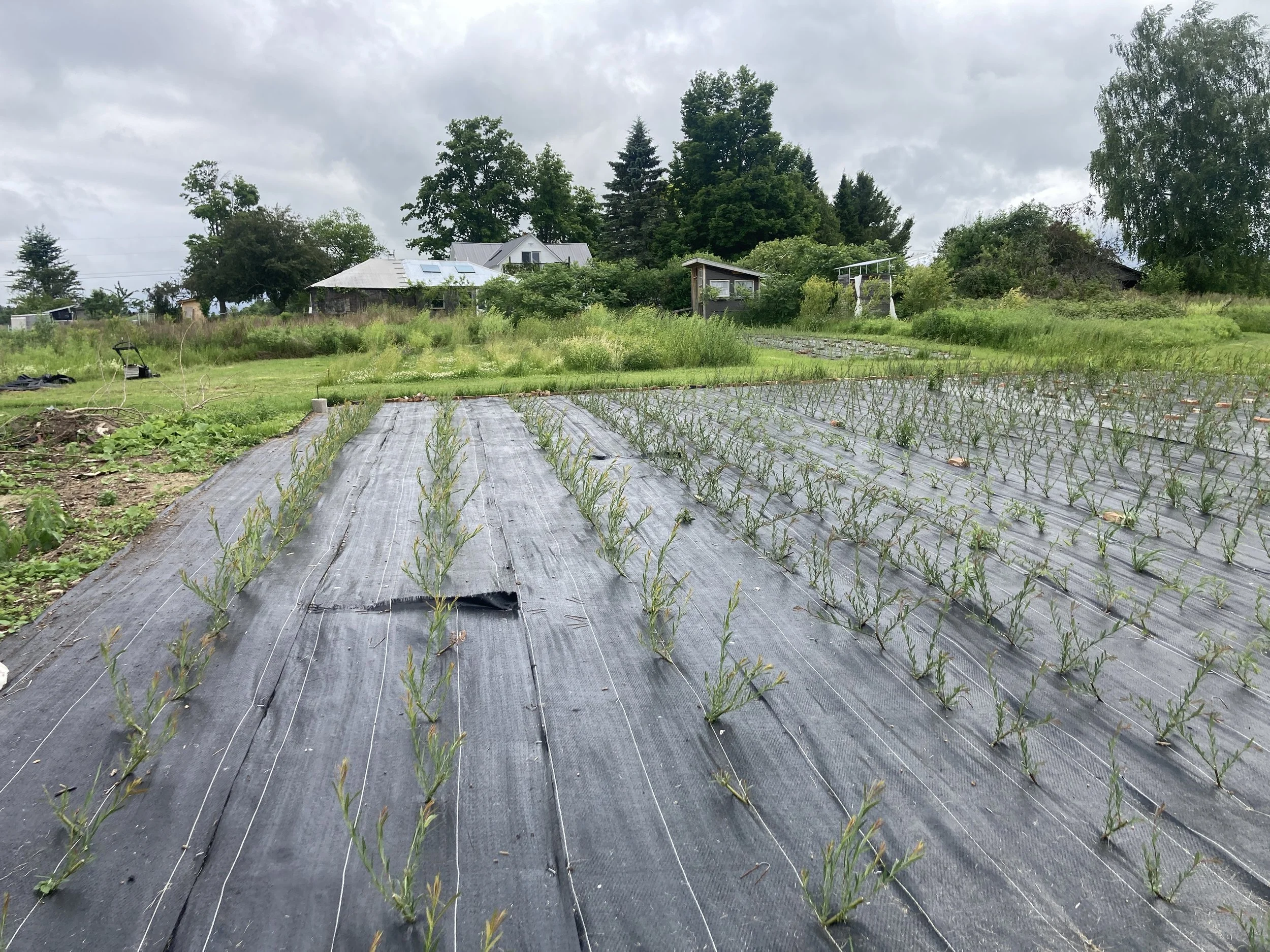
Two thousand new basketry willows planted in spring 2025
Eric has lived on the farm on and off over the last ten years, working steadily to stabilize and renovate the shop building and tend to the land. What had become dense with burdock, sumac and Jerusalem artichoke has been reopened into gardens and fields that now hold rows of thousands of basketry willows. A stand of Black Locust and White Oak has been planted that will one day form a small forest behind the studio. Birdhouses dot the fields, built following Peg’s original bluebird box plans.
Today, Vermont Handworks is not so much a beginning, as much as a new chapter. The work that happens here—teaching, learning, shaping materials by hand—echoes the values held by Jeanie and Bruce, both lifelong educators and supporters of creative work. Their belief in curiosity, craft, and community is woven into the atmosphere of the studio. Visitors often say they can feel something when they walk inside: a sense of warmth, of history, of belonging to a longer thread of making—a “good vibe,” as some describe it.
When you step into the shop, you’re entering a story still being written—one shaped by farmers, gardeners, teachers, makers, and now by the people who come here to learn and share. Every project created in this space becomes part of that continuum, part of a place where past and present meet in the shared act of making something with your hands.
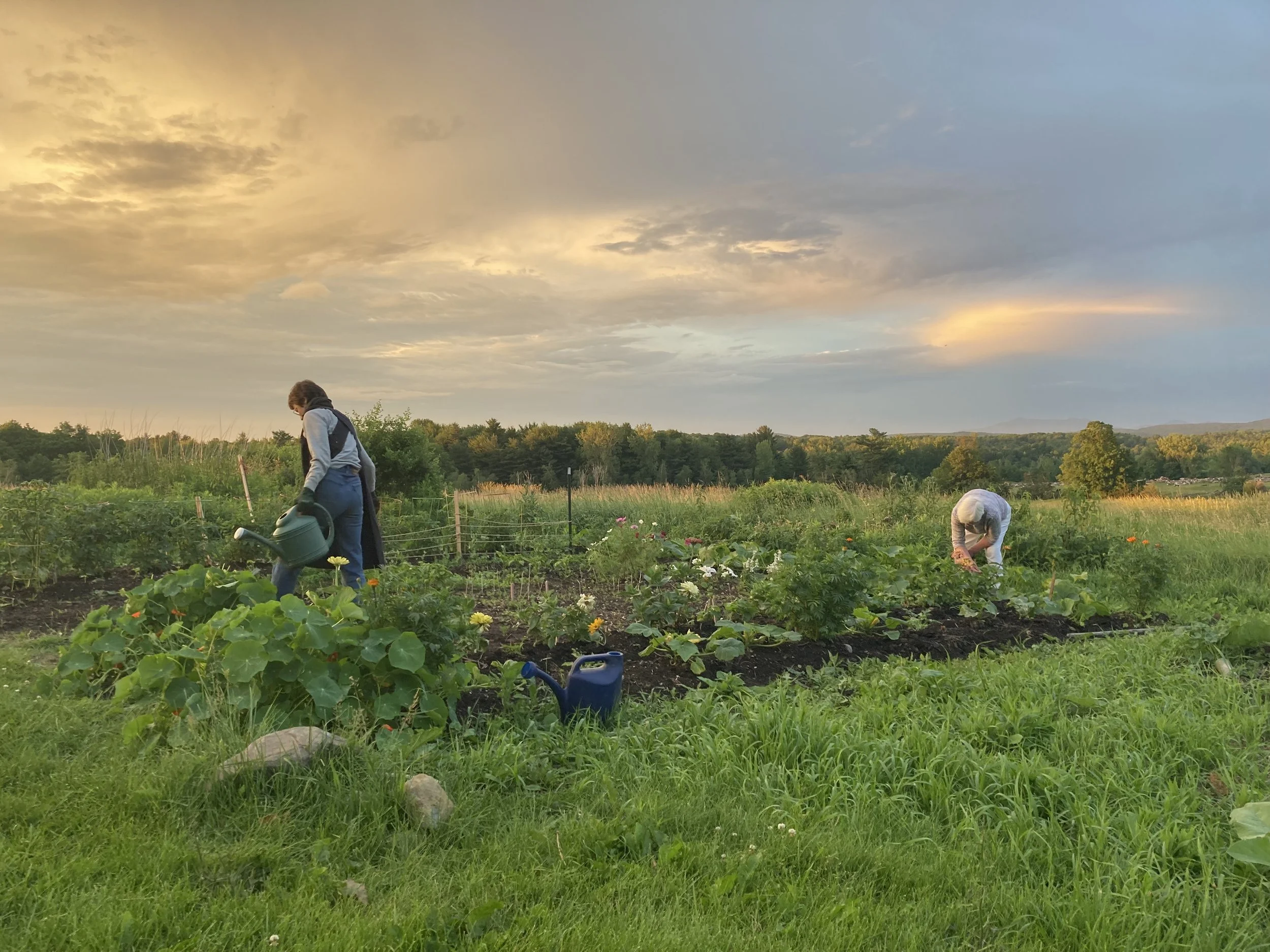
Jolynn and Jeanie in the garden, June 2022